
Get in Touch
![Data Foundations]()
![people image]()
![hi ai]()
![house of x factor]()
















Regulatory Reporting Excellence: How a Global Bank Improved
![image]()
![AI-Ready Retail Procurement on the Horizon]()
![bottom]()
The AI Is Ready. The Data Rarely Is.
AI agents are only as dependable as the data they retrieve from, the context they operate within and the foundations they reason on. A scattered data estate does not just slow agents down; it makes their outputs untrustworthy at the moment the business needs them most. Xoriant works alongside data and AI teams to change that, building the knowledge graphs, governed pipelines and retrieval architecture that turn a fragmented data estate into a foundation every agent can reason on with confidence.
Trusted Context. Grounded Retrieval. Dependable Agents.
Most leaders trust their AI roadmap long before they trust their data. Agents inherit every gap in that data: the missing context, the broken lineage, the facts that quietly contradict each other across systems. No model can reason its way around a foundation that was never built to be trusted.
Xoriant pairs data engineers and architects who have built governed platforms for regulated enterprises with the ORIAN 10x delivery framework, putting Human Ingenuity and AI (HI/AI) to work on the knowledge graphs, vector stores, and semantic contracts that make every downstream agent provably trustworthy.

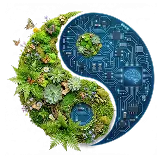
Overarching philosophy of HI/AI

House of Xfactors make it happen
How Can We Help ?
How We Build a Foundation Agents Can Trust
Multimodal Data Management
Ontologies and Metadata Curation
MDM and Data Quality
Context and Knowledge Graphs
Vectors and Memory
Semantic Contracts and Lineage
AI-Led Data Engineering
AI Cost Optimization
Enterprise Meaning Model
Knowledge Graph and Entity Resolution
Data as a Product
Multimodal Data Management
Multimodal Data Management
Bring structure to complexity: managing structured, unstructured, real-time, streaming data and audit logs within a single governed layer so every data type remains accessible, traceable, and ready to serve AI workloads at enterprise scale.
Ontologies and Metadata Curation
Ontologies and Metadata Curation
Give your data meaning, not just storage. Ontology modelling, metadata management, semantic mapping, and lineage tracking combine to create an AI-ready knowledge foundation where enterprise data is organised, discoverable, and understood by both humans and agents.
MDM and Data Quality
MDM and Data Quality
AI is only as trustworthy as the data behind it. Master data management, golden record creation, deduplication, and continuous validation establish a governed data baseline ensuring the records that feed AI models and analytics are accurate, consistent, and complete.
Context and Knowledge Graphs
Context and Knowledge Graphs
Engineer the semantic layer and knowledge graph that give agents shared context, so retrieval is grounded in meaning, not just keywords.
Vectors and Memory
Vectors and Memory
Build the vector and memory stores that let agents retrieve, recall, and reason across sessions instead of starting from zero every time.
Semantic Contracts and Lineage
Semantic Contracts and Lineage
Set semantic contracts and governed lineage so every data product carries clear meaning and a traceable record agents can be held accountable to.
AI-Led Data Engineering
AI-Led Data Engineering
Stop managing pipelines manually. AI-driven ingestion, integration, transformation, and pipeline orchestration cut engineering overhead, accelerate data delivery, and keep performance consistent as data volumes and complexity scale.
AI Cost Optimization
AI Cost Optimization
Make every AI dollar accountable. Token optimization, prompt engineering, model selection, workflow redesign, and resource right-sizing work together, backed by continuous cost analytics that give engineering and finance full visibility into AI spend and the controls to manage it.
Enterprise Meaning Model
Enterprise Meaning Model
Every metric resolves once, for every consumer, because the vocabulary of the business is agreed with a named owner and then served rather than re-derived in each report.
Knowledge Graph and Entity Resolution
Knowledge Graph and Entity Resolution
Relationships are held as objects rather than joins rebuilt per report, and the same entity under four spellings in five systems is resolved rather than quietly tolerated.
Data as a Product
Data as a Product
Two decades of logic is inventoried and published with a named owner, a live SLA and a residency answer, so it is consumed rather than requested.


Case Study
Strengthening Salesforce Performance, Security, and Scalability for a Leading Manufacturer
Xoriant helped a leading manufacturer optimize Salesforce performance, strengthen security, modernize integrations, and build a scalable platform for future growth.
Case Study
Scaling Smarter: How a Real Estate Leader Reinvented Tableau in the Cloud
Our client is a leading single-family home rental company, managing large-scale operations across markets.
Case Study
Regulatory Reporting Excellence: How a Global Bank Improved
FR Y-14 Compliance
How a global bank improved FR Y-14 reporting, enhanced adjustment traceability, and strengthened consent order compliance with a governed data framework.

Accelerators
Built to Accelerate What Matters Most
Data.Ontology
Agrees the two or three terms the money moves on, with a named owner for each. Not an ontology programme; that vocabulary is what everything downstream depends on.
Data.Semantic
Serves a semantic layer where every metric resolves once, for every consumer. Agents make that urgent, because they will happily consume three versions of the truth.
Data.Graph
Holds relationships as objects rather than rebuilding them per report. The resolution half is what makes it real: most estates carry the same entity several times under different keys.
Data.Context
Engineers retrieval and context, documents and streams included, sized to the answer rather than to the corpus. That is cheaper and more accurate at once.
Achievements
Engineering outcomes that speak for themselves
2x
faster AI delivery cycle
25 to 35%
lower cost to deliver
88%
audit accuracy on retrieval
Keeping You Updated


Article




FAQ
Data Foundation for AI
What does a data foundation for AI actually include?
It typically covers a semantic layer, knowledge graph, vector and memory stores, governed data products, and a lineage baseline so every agent can trace what it knows back to a trusted source.
Why can’t we just point our AI agents at our existing data warehouse?
A warehouse stores facts; it does not give agents shared meaning, governed access, or a way to retrieve the right context at the right moment, which is what a semantic and vector layer adds on top.
What is a semantic layer and why does it matter for AI agents?
It is a shared definition of what the data means, not just where it lives, so an agent in finance and an agent in support reason from the same facts instead of two different versions of the truth.
How is a knowledge graph different from a vector store?
A vector store finds content that is similar in meaning; a knowledge graph captures how facts and entities relate to each other, so agents can follow a chain of reasoning, not just a single match.
Why does data lineage matter once agents are making decisions?
When an agent gives an answer, lineage is what lets a person trace that answer back to its source, confirm it is current, and hold the system accountable, which regulators and auditors increasingly expect.
How long does it take to build a usable data foundation for AI?
A focused first phase, covering the semantic layer and the highest value data products, typically runs eight to twelve weeks, with governance and lineage maturing alongside the agents that depend on them.
Start a Conversation about your next horizon